

Learning Japanese has become a powerful career advantage for students and professionals who want to build global opportunities. Japanese language levels (N5 to N1) serve as the official framework used worldwide to measure Japanese proficiency. Whether you want to study in Japan, work with Japanese companies, or simply enjoy the culture, understanding all JLPT levels helps you plan your learning journey with confidence.
In this complete guide for beginners and advanced learners, TLS – The Japanese Language School breaks down everything you need to know about the Japanese language levels, exam structure, skills required, and preparation tips to help you progress from N5 to the highest level, N1.
What Are the Japanese Language Levels (N5 to N1)?
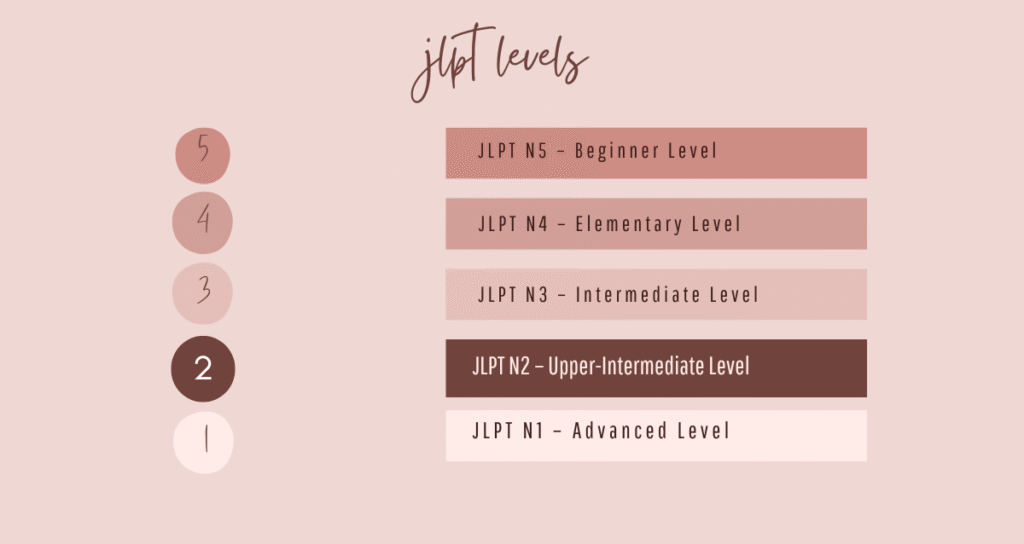
The Japanese Language levels Proficiency Test (JLPT) is divided into five levels:
- N5 – Beginner
- N4 – Elementary
- N3 – Intermediate
- N2 – Upper Intermediate / Business Level
- N1 – Advanced / Native-Approaching Level
N5 is the easiest level, and N1 is the most difficult. Each level tests your knowledge of:
- Vocabulary
- Grammar
- Kanji
- Reading ability
- Listening comprehension
Understanding each level helps learners set realistic goals and choose the right study path.
Japanese Language Levels N5 Complete Beginner
N5 is the foundation of the Japanese language. At this stage, learners become familiar with the basics of grammar, vocabulary, and writing systems.
What You Learn in JLPT N5
- Hiragana & Katakana mastery
- Basic Kanji (100 120 characters)
- Simple daily conversation
- Basic grammar (present, past, particles)
Skills You Gain
- Introducing yourself
- Asking simple questions
- Understanding slow, clear Japanese
- Reading short sentences
Is N5 Enough?
N5 is only the beginning. It prepares you for structured learning and higher levels. Many students join TLS at this stage for guided progress.
Japanese Language Levels N4 Elementary Proficiency
N4 builds upon N5 and moves learners toward more practical communication.
What You Learn in JLPT N4
- 300 Kanji
- 1,500 basic words
- More grammar patterns
- Ability to form longer sentences
Skills You Gain
- Understanding daily conversations
- Reading short stories or passages
- Talking about routine, preferences, and experiences
Why N4 Matters
Completing N4 means you can hold basic conversations and understand written Japanese used in everyday life.
Japanese Language Levels N3 The Bridge to Advanced Learning
N3 is an important milestone in the Japanese language levels (N5 to N1). It acts as the transition from beginner to advanced proficiency.
What You Learn in JLPT N3
- 600 Kanji
- 3,500 words
- Complex sentence patterns
- Faster-paced listening practice
Skills You Gain
- Understanding conversations in real-life situations
- Reading general topics such as news summaries
- Handling restaurant, travel, and work situations
Why N3 Is Crucial
Many companies consider N3 as the minimum requirement for internship or entry-level communication jobs involving Japanese.
Japanese Language Levels N2 Professional & Business-Ready Level
N2 is the most career oriented level of the JLPT. It demonstrates strong understanding of written and spoken Japanese used in professional environments.
What You Learn in JLPT N2
- 1,000 Kanji
- 6,000+ vocabulary words
- Formal grammar structures
- Complex reading comprehension
Skills You Gain
- Understanding business discussions
- Reading newspapers, magazines, reports
- Communicating confidently with native speakers
- Handling workplace conversations
Why N2 Is Highly Valued
N2 opens doors to:
- High-paying jobs
- IT, BPO, and translation roles
- Japanese corporate placements
- Study and work visa opportunities
Japanese companies often prefer candidates with N2 certification for hiring.
Japanese Language Levels N1 Near Native Mastery
N1 is the highest and most challenging level in the Japanese language proficiency system. It requires deep understanding of advanced grammar, vocabulary, and reading skills.
What You Learn in JLPT N1
- 2,000+ Kanji
- 10,000 vocabulary words
- Academic level grammar and phrases
- Advanced listening at natural speed
Skills You Gain
- Understanding television debates, lectures, and news
- Reading journals, research papers, and complex texts
- Communicating fluently with native speakers
- Performing translation and interpretation professionally
Why N1 Is a Prestige Level
Achieving N1 puts you among the top Japanese language users worldwide. It is ideal for:
- Interpreter careers
- International companies
- Research opportunities
- Working long-term in Japan
Comparing Japanese Language Levels (N5 to N1)
| JLPT Level | Kanji | Vocabulary | Difficulty | Skills |
| N5 | 100 | 800 | Beginner | Simple conversation, Hiragana/Katakana |
| N4 | 300 | 1,500 | Basic | Daily conversations |
| N3 | 600 | 3,500 | Intermediate | Real-life understanding |
| N2 | 1,000 | 6,000 | Advanced | Business-level Japanese |
| N1 | 2,000 | 10,000+ | Expert | Academic + professional fluency |
This structured system makes it easier for learners to move step-by-step toward mastery.
How to Choose the Right Japanese Language Level
Here are quick recommendations based on goals:
Choose N5 & N4 if you are:
- A beginner
- Learning for travel
- Exploring Japanese culture
Choose N3 if you want:
- Internship opportunities
- Strong conversational skills
- Foundation for career-focused learning
Choose N2 if you aim for:
- High-salary corporate roles
- Jobs in MNCs, IT, export/import, tourism
- Working with Japanese companies
Choose N1 if you want to become:
- A translator or interpreter
- A language expert
- A research scholar or educator
How TLS Helps Students Master Japanese Language Levels (N5 to N1)
TLS – The Japanese Language School provides structured, student friendly programs designed to help you clear all JLPT levels with confidence.
Explore the benefits and features of cutting-edge AI learning in our AI-powered digital marketing training.
Why Students Prefer TLS
- Experienced native & certified trainers
- Level wise curriculum (N5 to N1)
- JLPT focused coaching
- Regular mock tests & assignments
- Speaking, reading, and listening practice
- Flexible weekend and weekday batches
- Affordable course fees
- Placement support for N3 N1 learners
Whether you are a complete beginner or aiming for advanced fluency, TLS helps you progress step by step.
Preparation Tips for All Japanese Language Levels (N5 to N1)
Learn Kanji consistently
Kanji is essential for N3, N2, and N1 success.
Practice listening daily
Use Japanese podcasts, anime, and JLPT audio exercises.
Build vocabulary naturally
Flashcards, apps, and reading help retention.
Take regular mock tests
They help identify strengths and weaknesses.
Join a structured course
Guidance from experts accelerates learning.
Conclusion Start Your Japanese Learning Journey Today!
Understanding Japanese language levels (N5 to N1) is the first step toward mastering the language and building an international career. Whether your goal is personal growth, higher studies, or a job in a Japanese company, advancing through JLPT levels adds immense value to your profile.
At TLS – The Japanese Language School we offer specially designed courses for every level. If you’re ready to begin your Japanese learning journey, now is the perfect time to start.
Contact TLS today and take your first step toward fluency!
Join our beginner to advanced Japanese language courses and unlock opportunities in Japan and worldwide.
Visit: TLS – The Japanese Language School, Delhi
Call: +91 8700956038
Website: https://www.teamlanguages.com/
Frequently asked question
1. What are the Japanese language levels from N5 to N1?
The Japanese language levels consist of five JLPT levels: N5, N4, N3, N2, and N1.
- N5 is the easiest beginner level.
- N1 is the most advanced level.
Each level tests vocabulary, grammar, kanji, reading, and listening skills. As you progress, the difficulty and expected fluency significantly increase.
2. What is included in the N5 Japanese level?
The N5 Japanese level covers the basics of the language, including:
- Hiragana and Katakana
- Around 100 120 kanji
- Basic grammar
- Simple daily conversation
N5 helps learners understand short phrases, basic questions, and everyday vocabulary.
3. How difficult is the N5 Japanese test?
The N5 Japanese test is considered the easiest JLPT level. It tests your ability to:
- Read simple sentences
- Understand slow, basic conversations
- Recognize common vocabulary and kanji
With consistent practice, beginners can clear N5 within 3–4 months.
4. What topics are covered in the N4 level Japanese test?
The N4 level Japanese syllabus includes:
- 300 kanji
- 1,500 vocabulary words
- More complex grammar structures
- Short reading passages
- Everyday conversation listening
N4 proves that you can understand basic Japanese used in daily life.
5. What is N2 level Japanese proficiency?
The N2 level Japanese proficiency demonstrates strong comprehension of everyday and business-level Japanese.
At N2, learners can:
- Understand newspaper articles
- Follow normal-speed conversations
- Recognize 1,000+ kanji
- Use formal and professional grammar
N2 is often required for jobs in Japanese companies.
6. What does Japanese N1 level mean?
The Japanese N1 level is the highest and most advanced JLPT level. It shows near-native ability in:
- Reading complex, academic texts
- Understanding fast, natural conversations
- Using advanced grammar and vocabulary
N1 is ideal for interpreters, translators, and high-level professional roles.
7. Is N5 equivalent to Japanese language level A1?
Yes. The N5 Japanese level is generally considered equivalent to A1 in the CEFR (European framework).
Both represent beginner-level proficiency, focusing on simple conversations, basic words, and everyday expressions.
8. How long does it take to complete Japanese N5 level?
Most learners take 2–4 months to complete Japanese N5 level, depending on study intensity. Regular practice of Hiragana, Katakana, vocabulary, and beginner grammar makes the process faster.
9. Is the N4 Japanese test much harder than N5?
Yes. The N4 Japanese test requires more vocabulary, more kanji, and a deeper understanding of grammar.
You must be able to read short stories, follow conversations, and understand slightly faster spoken Japanese compared to N5.
10. How important is the N2 Japanese level for career growth?
The N2 Japanese level is highly valuable for:
- IT companies
- BPO/KPO sectors
- Translation jobs
Japanese multinational companies
Most employers accept N2 as proof of strong communication skills.
